
How one Chessie owner went from YouTube guesswork to Chessie hunting retriever success
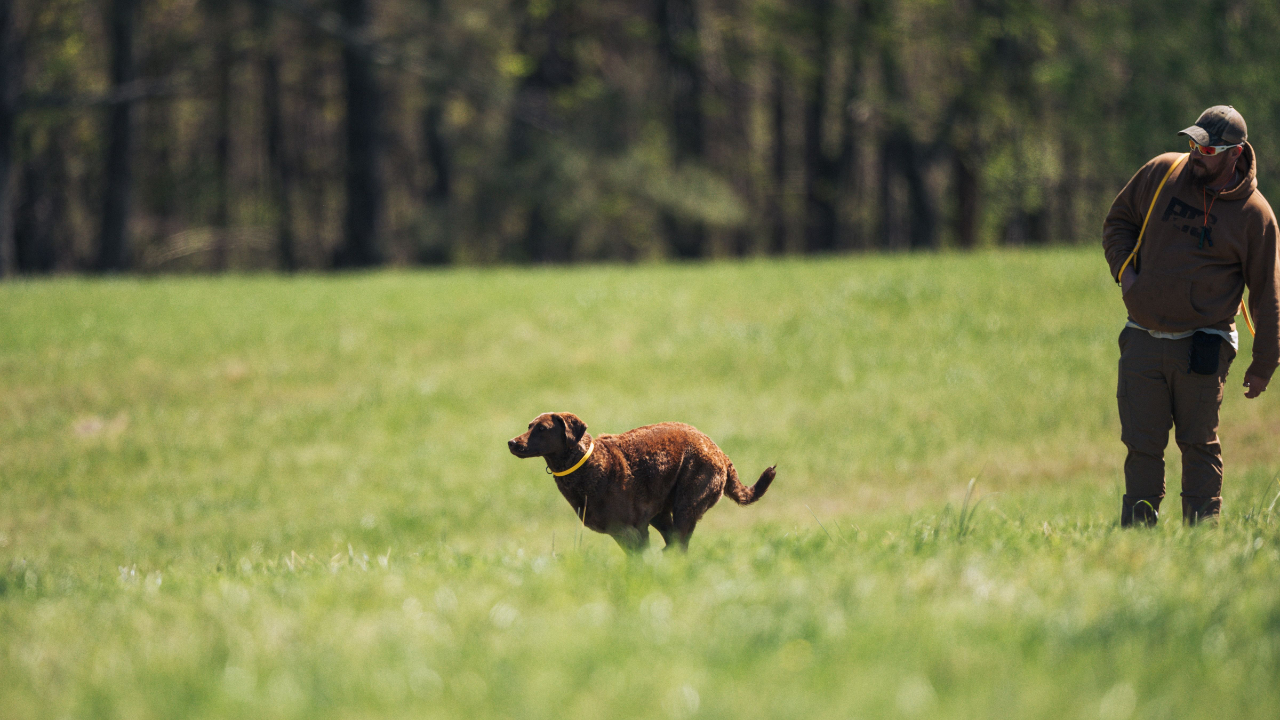
Adam Goza grew up chasing elk in Colorado, hunting alligators in South Alabama, and traveling the country with his three-time IBO world champion father. But when he brought home a Chesapeake Bay Retriever puppy named Ivy, he hit a wall he hadn't expected. Training a Chessie for duck hunting turned out to be harder than anything he'd faced in the field.
His story is one that thousands of hunting dog owners will recognize, and it holds lessons that go far beyond a single breed.
Introduction: A Chessie will teach you what you don't know
If you own a Chesapeake Bay retriever, you already know the look people give you when you mention the breed. The raised eyebrows. The half-smile. The polite, "Oh, a Chessie. Good luck with that."
There's a reason for that reputation. Chessies are headstrong, particular about who they trust, and wired to think of themselves as your equal rather than your subordinate. Training Chessies for duck hunting demands a different mindset than what works for a Lab or a Golden, and most generic retriever training advice doesn't account for that difference.
Adam Goza learned this the hard way. After years of failed attempts with other dogs, cobbled-together YouTube methods, and one very gun-shy English cocker, he brought home Ivy from a breeder in South Carolina with one goal: do it right this time. What followed was a journey through frustration, breakthrough, and a complete shift in how he understood Chesapeake Bay Retriever training. His Cornerstone review of the experience offers a map for anyone stuck in the same spot.
Section 1: Chesapeake Bay Retrievers play by their own rules
Every retriever breed has quirks. But the Chesapeake Bay retriever occupies its own category when it comes to temperament and training expectations. If you've chosen this breed, you've signed up for a dog that will test your patience, your creativity, and your ego. Understanding what makes them tick is the first step toward Chessie hunting retriever success.
Respect is the price of admission
Adam describes his Chessie as a dog that wants to be his equal. That's not stubbornness for the sake of stubbornness. It's a breed trait rooted in the Chesapeake Bay Retriever's history as a working dog that operated with significant independence in harsh conditions.
Where a Lab might comply because you asked, a Chessie needs to understand why. You earn their cooperation. You don't demand it. This is the single biggest adjustment most Chessie owners need to make, and it's one that no quick-tip video covers well.
Adam put it plainly: "You've got to almost earn their respect to move them in a direction." That earned respect becomes the foundation for everything else in your training.
Socialization isn't optional with this breed
Chesapeake Bay Retrievers tend to be one-family dogs. They bond deeply with their people and can be suspicious of outsiders. Left unsocialized, that suspicion can escalate to aggression.
Adam's previous dog, an English cocker named Trace, showed a natural protective instinct that surprised everyone. That quality was part of what drew Adam toward the Chesapeake Bay Retriever breed when he started researching. He wanted a dog that could protect his three daughters and still perform as a hunting companion.
The fix, as Adam learned, is straightforward. Socialize them early and often. Expose them to people, environments, and situations while they're young so they learn the difference between a genuine threat and a neighbor stopping by. Skip this step, and as Adam says, "they might bite somebody."
The traits that frustrate you are the ones you'll love in the blind
Ivy barks when something in the yard gets moved. She alerts to changes in her environment like a sentry on watch. She "smiles" in that weird Chessie way. These quirks can be maddening during daily life, but they point to a dog with high awareness, strong drive, and deep loyalty.
Those same traits translate to a hunting partner who is locked in, alert, and committed when it counts. The independence that makes a Chessie hard to train in the yard is the same independence that makes them reliable in cold water, heavy cover, and tough retrieves.
Understanding this connection between daily frustrations and field performance changes how you approach training. It helps you see those quirks as raw material rather than problems to fix, and that perspective shift is where real Chessie retriever training begins.
Section 2: YouTube can start you off but it can't finish the job
Before Cornerstone, Adam did what most of us do. He watched YouTube videos, listened to podcasts, and tried to piece together a training plan from free content. The information wasn't bad. The problem was something more fundamental.
Good information in the wrong order still fails
Adam's first real training disaster happened with Trace, the English cocker. His dad had gotten lucky with Trace's mother, Bella, using a loose, intuitive method of getting her excited about birds and then taking her to a low-pressure hunt. Adam tried the same approach but skipped the low-pressure step. He took Trace straight to a field with 30 hunters and 300 birds in a single day.
The dog was terrified. From that point forward, Trace wouldn't go near a gun.
YouTube compounds this problem. You can find a solid video on e-collar conditioning, another on force fetch, and a third on lining memories. Each one might contain accurate information. But without knowing the correct sequence, the right timing, and how each skill builds on the last, you're stitching together a training plan with gaps you can't see.
E-collar mistakes happen fast
Adam is blunt about e-collars. "You can burn a dog on one and make them hard to ever control correctly if you do it wrong."
He's right. A 10-minute video on collar conditioning leaves out the nuance that keeps a dog's trust intact. If you get frustrated, and everyone does eventually, you press the button at the wrong time, at the wrong level, and the damage can be lasting.
Adam speaks from experience here. The relationship between handler and dog is the most important thing in training. An e-collar used poorly erodes that relationship faster than almost anything else.
The missing piece is feedback
Obedience basics, sure. Adam could get Ivy to sit, lie down, and fetch a ball. But place commands, lining memories, remote sends? Those were beyond what any amount of video-watching could teach.
The deeper issue wasn't information. It was isolation. Adam had no one to ask, "Am I doing this right?" No one to say, "Try it this way with your dog." No one to bounce ideas off when he hit a wall.
That feedback loop, the ability to describe what's happening and get a specific response, is what separates structured training from guesswork. And it's what finally changed things for Adam when he found Cornerstone.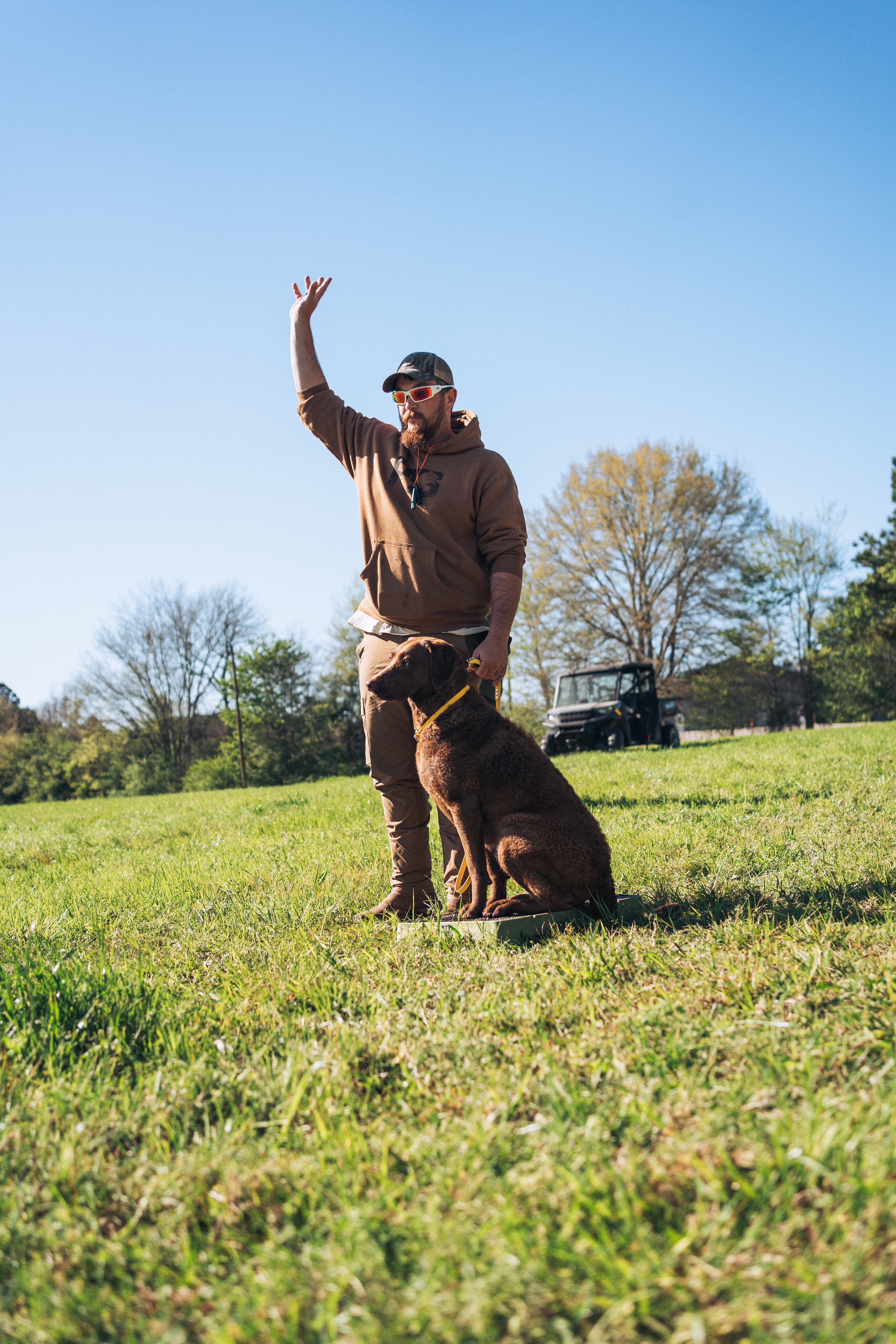
Section 3: Structure turns guesswork into progress
When Adam first joined, his wife Shelby was skeptical. "Every one of them has been a scam," she told him. Most hunting dog owners who've looked at online programs have felt the same hesitation. Adam's Cornerstone review of his early experience tells a different story.
A 52-week framework keeps you moving forward
The Cornerstone program lays out a 52-week training flow that builds skills in sequence. Each week introduces new concepts while reinforcing ones you've already established. For someone like Adam, who admits he needs direction to stay productive, this structure was transformative.
He started Ivy on place work at eight weeks old, sending her to a box and throwing retrieves. He thought he was ahead of the curve. The program helped him realize he was doing too much too fast.
That kind of correction, delivered at the right time, prevents the compounding errors that derail training down the road. A structured plan doesn't eliminate hiccups. It keeps hiccups from becoming habits.
Weeks are milestones, not deadlines
One of Adam's biggest realizations came at Member Weekend. He'd been thinking of the program in terms of "I'm on week twenty-eight," as if falling behind schedule meant failing. Talking with other members reset that thinking.
"It doesn't mean you have to do it in a week," Adam says. "There are people who go through it faster than a week. There are people who take three months on one week. And that's fine."
The 52-week structure is a sequence, not a race. Some dogs need more time on certain skills. Some handlers do too. The point is that you know where you are, where you're headed, and what comes next.
The Cornerstone community fills in the gaps
When Adam hit a wall with Ivy before Members Weekend (she'd go out to a bumper, sniff it, and walk back without picking it up), he had access to the whole CGA community. That kind of access matters.
He also found support from other members at Member Weekend. People like Marty, Chris, and Kevin who helped him understand that his challenges weren't failures. They were breed-specific puzzles that needed breed-specific solutions.
The community, including the AI-powered coach that generates lesson plans and answers breed-specific questions about Chesapeake Bay Retrievers, creates a support system that YouTube can't replicate. When Adam's wife had a billing issue during purchase, Josh called personally within the hour. That level of investment carries through the entire program.
Section 4: Train the dog in front of you
This phrase came up repeatedly during Adam's time at Member Weekend, and it became the lens through which he now approaches every training session. The concept is simple. The execution requires you to put your ego aside.
Read your dog before you drill your dog
Adam arrived at Member Weekend planning to run Ivy in the Huntable standard. He realized quickly she wasn't ready. Rather than push her through an evaluation she'd fail, he pulled back.
That decision itself reflects a shift in thinking. The old Adam, the one piecing together YouTube advice, would have forced it. The new approach asks a different question first: what does my dog need right now?
Ivy is about fifteen months old. In dog-development terms, that's roughly a seven-year-old child. Expecting perfection from a child or even a teenager (in dog years) is setting everyone up for frustration.
A squirrel broke through the fetch wall
Adam struggled with fetch-hold-release for weeks. Ivy wouldn't grab the bumper on command. No amount of repetition was working.
Then he shot a squirrel in the yard.
Ivy wanted it so badly that when Adam said "fetch," she took it from his hand without hesitation. That single moment broke through the wall. From there, Adam could build the behavior using objects Ivy cared about, gradually shaping the response he needed.
The principle behind this story matters more than the squirrel itself. Adam stopped trying to force a method and instead found what motivated his specific dog. He communicated with Ivy on her terms. That's what "train the dog in front of you" looks like in practice, and it's the kind of creative problem-solving that produces Chessie hunting retriever success.
Bad days are data, not disasters
Some days, Ivy doesn't want to do retrieves. Adam used to push through those days, frustrated and determined. Now he takes her for a walk instead.
"Dogs are the same as us," he says. "If I come home mad at the world, I'm not going to listen to anything anyone says, and there are days I wake up that way."
Recognizing that a bad training day isn't a setback, it's information about where your dog is mentally, keeps you from damaging the relationship you've worked to build. This single shift in mindset, treating resistance as a signal rather than defiance, has made Adam a fundamentally different handler.
Section 5: Focus on the wins to build momentum
Adam and his wife Shelby left Member Weekend with a phrase they kept repeating to each other. It became their training mantra and, as Adam points out, a principle that applies well beyond the dog field.
One good retrieve can change your whole week
"If you've had a bad week of training but you got one good retrieve out of the whole week, awesome. Focus on that win. Build from there."
This approach sounds soft to people who think training should be all discipline and standards. It's not soft. It's strategic. When you anchor your attention to what's working, you create a feedback loop that reinforces the behaviors you want to see more of.
Adam watched Ivy sprint to the far end of a pond at Member Weekend, leap in, and swim the long way around to a bumper that was only ten yards off the bank. She wanted a longer swim. That fire, that enthusiasm, is worth more than a dozen technically correct but flat retrieves.
Your energy shapes your dog's performance
Dogs read emotion better than most people do. If you walk into a training session frustrated, critical, and focused on everything your dog isn't doing right, your dog feels that.
Adam learned this the hard way. Chessies in particular are tuned into their handler's state of mind. A Chesapeake Bay Retriever that senses tension will either shut down or push back, neither of which helps training.
The flip side is powerful. When you bring genuine enthusiasm and focus on progress, your dog responds in kind. That energy becomes contagious, and sessions start producing better results with less friction.
Patience pays off in the duck blind
Adam hopes to hunt Ivy this season. He also says if it doesn't happen until next year, that's fine. "I still got time with my dog between now and then. No big deal."
That patience, the willingness to let the timeline flex around the dog's readiness rather than the calendar, is the difference between an owner who burns through dogs and one who builds a lifelong hunting partner. Adam expects he'll cry when Ivy brings back her first duck. Given everything they've been through together, he's probably right.
And that moment, when it comes, will be built on every walk they took instead of training, every squirrel breakthrough, every frustrating week where one good retrieve kept them going. Training Chessies for duck hunting is a long game, and Adam is playing it right.
Conclusion: The best training program is the one that changes you too
Adam's journey from YouTube guesswork to structured, confident training didn't just change Ivy. It changed him. He went from a handler who pushed through resistance and hoped for the best to one who reads his dog, adapts his approach, and trusts the process.
That transformation is the real Cornerstone review. The 52-week program, the community, the AI coach, and the direct access to trainers all matter. But the lasting change happens inside the handler. When you stop forcing your dog to fit a method and start building a method around your dog, everything shifts.
Key Takeaways
- Chesapeake Bay Retrievers need to respect you before they'll follow you
- Socialize Chessies early and often to prevent aggression issues
- YouTube provides good information but rarely in the right order
- E-collar mistakes can permanently damage your dog's trust
- The 52-week Cornerstone program is a sequence, not a deadline
- Train the dog in front of you by finding what motivates that specific dog
- Bad training days are signals to adjust, not reasons to push harder
- Focus on wins to create momentum and strengthen your bond
- Your emotional state directly affects your dog's performance
- Patience with the timeline produces a lifelong hunting partner
💡 What's one thing your dog did right this week that you can build on tomorrow?
Adam's story started with a simple decision: stop guessing and follow a plan built for this. If you're training a Chesapeake Bay Retriever (or any retriever) and you're tired of stitching together advice that doesn't quite fit, Cornerstone Gundog Academy has helped over 7,000 hunting dog owners across the U.S. and Canada find that same clarity.
Purchase the course, follow the videos, and start building the kind of partnership with your dog that makes every hunt worth the wait.
Q&A
Question: Why are Chesapeake Bay Retrievers harder to train than Labs or Goldens, and what mindset shift helps?
Short answer: Chessies are more independent, slower to trust, and more likely to see themselves as your equal. Instead of expecting quick obedience, earn cooperation first. When you see that their so-called stubborn traits are also what make them great in hard hunting conditions, you stop fighting the dog and start using those traits well.
Question: How important is socialization for a Chessie, and what should it include?
Short answer: It is a must. Chessies often bond most with one family and can grow wary of strangers if left unexposed. Start early and keep showing them new people, places, and situations so they can tell the difference between a true threat and normal life, like a neighbor stopping by.
Question: Why was YouTube not enough for Adam, and what did Cornerstone change?
Short answer: YouTube gave him useful tips, but not in the right order and without feedback. That left gaps and caused mistakes, like moving too fast. Cornerstone gave him a 52-week step-by-step plan and timely feedback, while the community and AI coach gave him breed-aware help he could not get from videos.
Question: What is the real risk with e-collars, and how should a handler use them?
Short answer: A few bad presses at the wrong time or level can burn a dog and damage trust. Adam says the bond comes first. Used poorly, a collar can hurt that bond faster than almost anything else. Good timing, patience, and a clear plan help prevent frustration-driven mistakes.
Question: What does "train the dog in front of you" look like in practice?
Short answer: It means reading your dog's readiness and changing the plan in real time. Adam skipped a test when Ivy was not ready, used a squirrel retrieve to break through fetch problems, and turned bad training days into walks instead of fights. He looked for small wins and treated the 52-week plan as a path, not a deadline.

Not Sure What To Do With Your New Puppy?
Check out some of our best advice. It's free to the new puppy owner.


